I was born and raised in Churches of Christ (Stone-Campbell Movement), and I happily remain in that tradition today. That’s not to say that I haven’t had to unlearn some things from my upbringing, or that I haven’t had strong objections to certain teachings and practices I’ve encountered through the years. Churches are by their nature made up of imperfect people. No tradition is perfect, and mine is no exception. Doctrinal issues should not be ignored, and there is a time and place to confront these issues and work toward reform. That said, there are aspects of my tradition that I still deeply appreciate: the ubiquitous love and reverence for holy Scripture, the commitment to congregational autonomy, the weekly observance of the Lord’s Supper, and the acapella worship style. But perhaps one of my favorite theological aspects of Churches of Christ is their high, sacramental view of believer’s baptism.
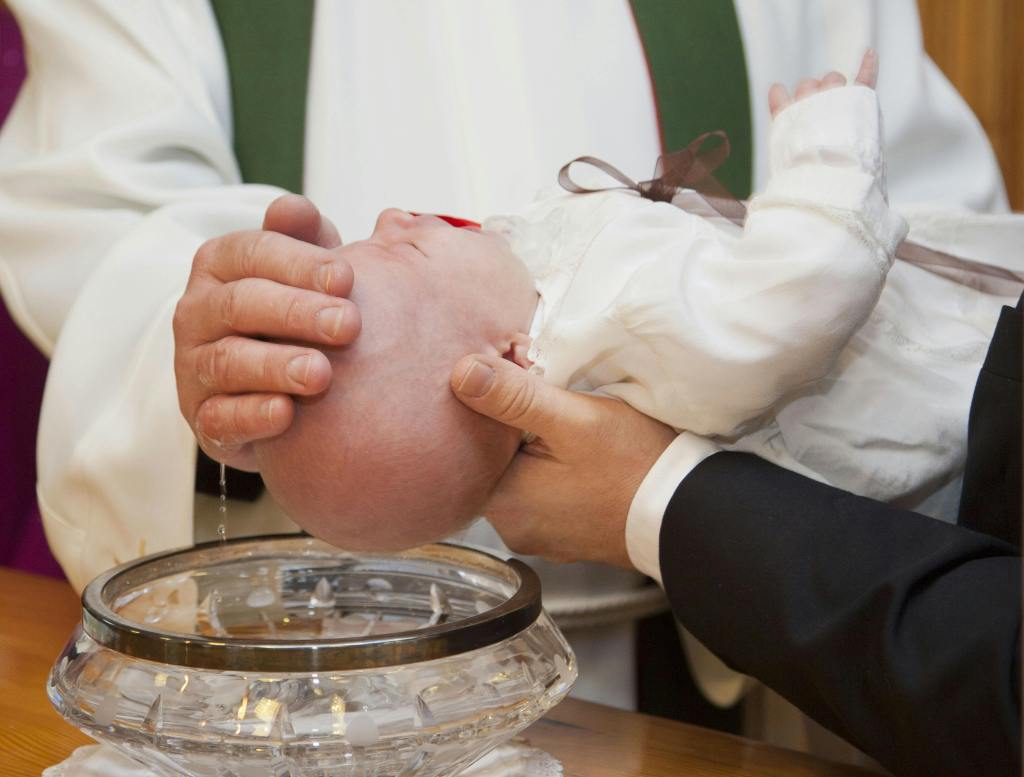
Throughout my time in graduate school, several dear friends of mine have left Churches of Christ for more historically-grounded, liturgical, ‘High Church’ traditions—whether Catholic, Orthodox, Anglican, or Lutheran. I can only speak anecdotally, but this trend seems to be much broader than my own experience—particularly among those who pursue advanced theological education. Off the top of my head, I can think of three good friends who have become Roman Catholic; four who have become Anglican or Episcopalian; one who has become Eastern Orthodox; and two who are actively flirting with Orthodoxy. And this is only within the last couple of years. In speaking with these friends, I’ve been interested to learn that infant baptism has been a primary, driving factor in their decision to convert. Many of these friends already have children, are planning to have children soon, or are currently expecting children; and they have been understandably concerned with whether or not they should baptize their infant child(ren).
Some of my friends in Churches of Christ might be surprised to hear that this is even a concern. Many of us have only ever heard the argument for infant baptism from teachers in our tradition who reject it. Growing up, this was my experience; and the arguments I heard for infant baptism were often laughable caricatures and strawmen that we could easily discredit. In recent years, I’ve benefited immensely from hearing arguments for infant baptism from wise and seasoned teachers who actually subscribe to the doctrine. There are good, thoughtful, and coherent arguments for affirming infant baptism. I don’t find them ultimately convincing (and I will explain why); but we do ourselves a disservice if we pretend as though paedobaptists (the technical term for those who baptize infants) don’t have an intellectually credible case. I don’t have the time in this blog series to ‘steelman’ the case for infant baptism as well as I’d like, but in my final post, I am including resources from both sides for those interested in further investigation.
Believer’s baptism is the practice of baptizing only those who have made a credible profession of faith; and infants are clearly excluded from this. My goal in this short, three-part series is simple. I want to, as succinctly as I can, explain why I have nevertheless remained a convinced proponent of believer’s baptism. (The technical term for someone like me would be ‘credobaptist’—from the Latin word ‘credo,’ meaning ‘I believe.’) I won’t be able to address every counter-argument. In fact, I won’t even have the space to fully elucidate my own arguments and tease out their implications. Even so, my High Church friends often ask me about my credobaptist position; and I thought I would at least start a conversation by offering a brief defense of it from a biblical, theological, and historical perspective. It is my sincerest intention that these arguments are put forward with a humble and loving spirit that is open to dialogue, correction, and change. I hope they are received with a similar spirit.
In my view, the most cogent arguments for paedobaptism are those that stress the need for continuity between the old and new covenants. The logic goes something like this: children were not excluded from the covenant community in the OT, and it seems the same should be true of the new covenant community—especially since the new covenant seems to be, in many other respects, widening in its inclusivity (e.g., the new covenant offers gentiles full inclusion). Abraham’s entire household was circumcised to signify corporate entrance into God’s covenant community (Gen 17:23ff). Later OT stories similarly emphasize covenant entry as a communal activity involving comprehensive, collective circumcision (e.g., the Shechemites in Gen 34:24 or the sojourners in Exod 12:48). Is it a coincidence, then, that when Cornelius, Lydia, Crispus, Stephanas, and the Philippian Jailer are baptized, they are baptized corporately with their entire households? Regardless of whether any infants were actually present in those households, the fact that baptism was understood as a corporate, household affair—much like circumcision—should be enough to give credobaptists pause. Even more, Paul explicitly relates baptism to circumcision (Col 2:12); Peter preaches that children are included in “the promise” (Acts 2:39); and Jesus affirms that the kingdom of God belongs to little children (Luke 18:16).
Despite its cogency, I will explain in future posts why the above rationale does not convince me. But for now, I simply want to highlight one aspect of paedobaptist theology that credobaptists can and should affirm. Paedobaptists rightly recognize baptism as a work of God, a gracious gift. When we are baptized, we are not saving ourselves, washing away our own sins, transferring ourselves into the body of Christ, or bestowing upon ourselves the gift of the Holy Spirit; all of this is ‘the working of God’ (Col. 2:12). In baptism, we yield ourselves to God’s powerful, transforming work in complete submission, humility, and vulnerability. The transformation that takes place at baptism is not our own doing, but God’s. We can accept no credit, no glory for what happens to us in the water. Paedobaptists are right on the mark with this. Sadly, I’ve seen some credobaptists so emphasize human agency in the conversion process that the gracious, transformative, and infinitely more significant work of God is obscured. Baptism is a merciful gift; and we would do well to listen and learn from our paedobaptist siblings on this point.
In my next post, I will dive into some of my biblical and theological rationale for accepting and adhering to the credobaptist position. And in my final post, I will address some of the popular biblical texts used against credobaptism; clarify my stance on original sin; and offer a tentative conclusion. But for now, I’d love for all of us to simply sit with this acknowledgement that baptism is not a meritorious work but a God-given gift. And I’d love for both credobaptists and paedobaptists to momentarily set aside their differences and join together in praising God for God’s matchless mercy and grace.
 Jared Dale Greer
Leave a comment